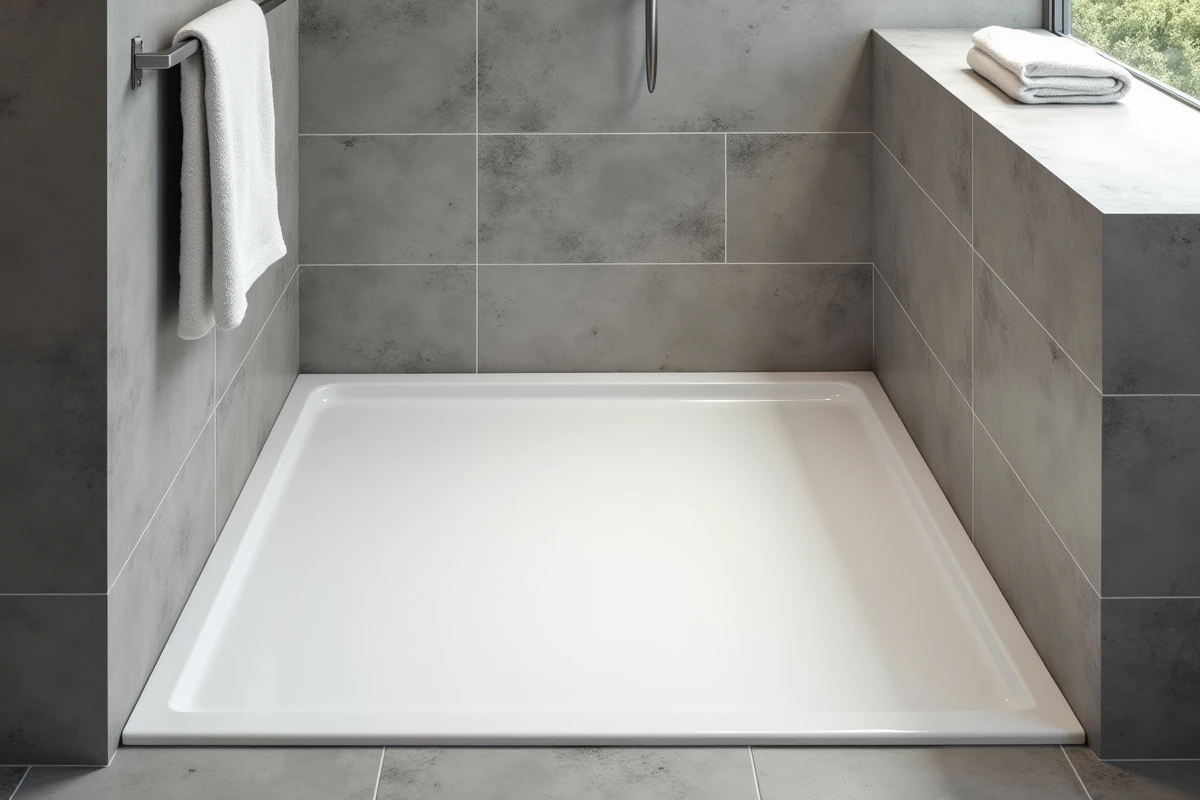
The shower tray is the piece that collects and directs water towards the drainage. Its choice determines the height of the access threshold, the ease of maintenance, and the durability of the entire shower. Before comparing materials or shapes, a technical criterion often overlooked deserves to be examined first: the compatibility between the tray and the drainage system.
Drainage and drain: the technical criterion that conditions everything else
Most guides focus on the material or shape of the tray. However, the sizing of the drainage remains the factor that makes the difference between a functional shower and one that backs up after a few months.
The drain diameter and drainage flow rate must be adapted to the volume of water that the shower produces. A high-flow showerhead combined with an undersized siphon causes stagnation or even overflow. Manufacturers of drainage systems like Nicoll or Wirquin publish technical notices specifying the flow rates compatible with each drain diameter.
Access to the siphon after installation is another point to check. On a recessed tray, an inaccessible siphon complicates any unblocking or replacement intervention. Planning for an access hatch or a top-extractable siphon avoids having to break the tiles a few years later. This parameter sometimes influences the choice of installation type as much as aesthetics.
To delve deeper into these technical aspects before a purchase, it is useful to choose a shower tray on D Kom Déco where installation constraints are detailed by type of tray.

Shower tray materials: resin, ceramic or acrylic
The material determines three things: the weight of the tray, its resistance to impacts, and its texture to the touch. Each option involves different compromises.
Mineral resin
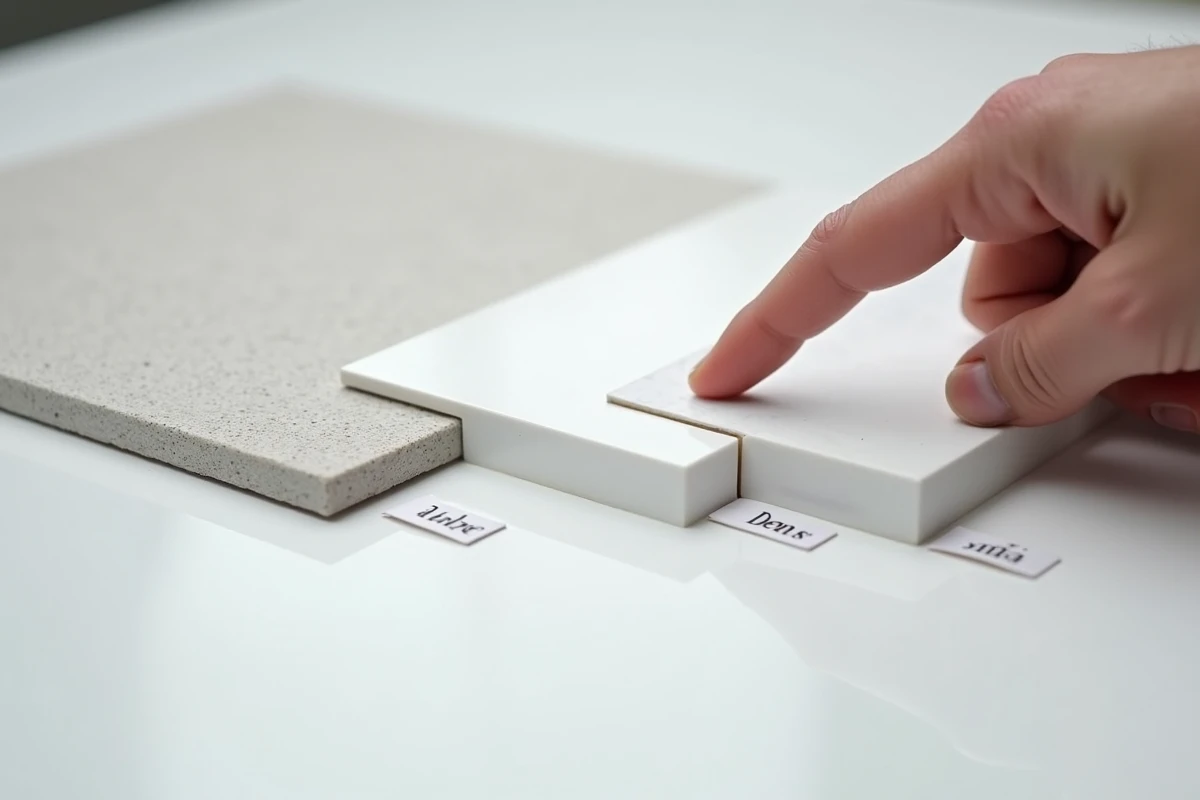
Mineral-filled resin (often stone or slate powder) produces a thin, rigid tray whose surface can mimic natural stone. This material is resistant to superficial scratches and offers a slightly grainy surface that limits the risk of slipping. Its weight remains moderate compared to ceramic, making it easier to handle during installation.
Today, resin constitutes the most common high-end segment for ultra-flat trays. Its durability depends on the quality of the mineral fill: a high proportion of minerals improves strength but increases the price.
Ceramic and glazed stoneware
Ceramic is the historical material for trays. Its glazed surface resists cleaning products and maintains its appearance for years. Glazed stoneware offers superior durability compared to standard ceramic, with a higher density that makes it less sensitive to localized impacts.
The downside: weight. A glazed stoneware tray weighs significantly more than a resin or acrylic model, complicating installation on upper floors or lightweight flooring.
Acrylic
Acrylic is the lightest and most budget-friendly material. It warms up quickly when in contact with water, making it pleasant in winter. However, its flexibility makes it more susceptible to scratches and marks over time. A fiberglass reinforcement under the shell improves the rigidity and longevity of the tray.
- Mineral resin: high-end finish, good scratch resistance, moderate weight, higher price
- Ceramic/glazed stoneware: very good durability, easy maintenance, significant weight
- Acrylic: lightweight, economical, pleasant to the touch, but more fragile to impacts
Ultra-flat tray and accessibility: what the regulations change
The decree of September 11, 2020, regarding the accessibility of new housing has strengthened the requirements for accessible showers. The obligation applies not only to the tray but to the entire shower space: reduced threshold, circulation width, and floor continuity.
The ultra-flat tray (a few centimeters high) meets this requirement by eliminating the step. For people with reduced mobility, this type of tray combined with a flush drain offers level access comparable to an Italian shower, without needing to embed the tray in the screed.
This point has practical consequences even outside the PMR context. In a renovation, an ultra-flat tray avoids having to dig into the slab to embed a traditional tray. However, the drainage slope must be sufficient: if the tray is very thin, the available margin to create the slope towards the drain is reduced. Ready-to-tile systems offered by manufacturers like Wedi or Schlüter-Systems include a pre-formed slope that secures this point.
Shape and dimensions: adapting the tray to the bathroom
The shape of the tray directly depends on the planned location in the bathroom. A rectangular tray is most often installed at the back of the room or in a niche. A quarter circle utilizes a corner and frees up floor space.
- Rectangular: the most versatile format, available in the widest range of dimensions
- Square: suitable for small bathrooms, often associated with a closed shower cabin
- Quarter circle: optimizes a corner, rounded design that softens the room
- Custom: some manufacturers offer cuts adapted to atypical configurations, especially in resin
The size of the tray directly influences user comfort. A tray that is too narrow makes daily showering uncomfortable, even if it visually integrates well. The minimum comfortable width is generally around the shoulder width of an adult, which points towards formats of at least 80 cm on the shortest side.
The choice between a standard model and a custom cut also depends on the material. Resin lends itself well to custom dimensions. Ceramic, made by molding, is limited to the cataloged formats of the manufacturer.
The last point to decide is the surface finish. A smooth tray facilitates cleaning but can become slippery. Anti-slip treatments (textured surface, studs, grooves) add safety, with a slight compromise on ease of maintenance. The anti-slip classification standard (classes A, B, C for bare feet) is listed on the manufacturers’ technical sheets and allows for objective comparison of models.