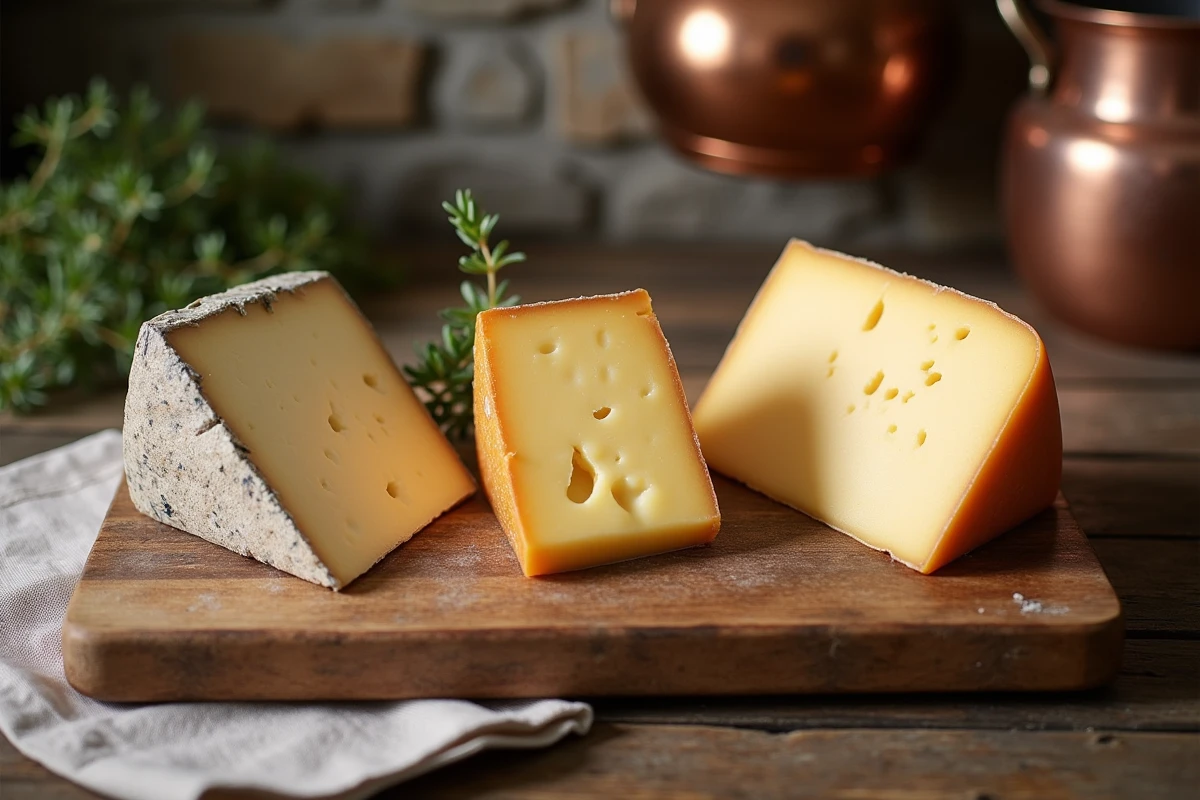
Cantal, Comté, Beaufort: three pressed cheeses, three AOPs, yet with profiles that are completely different from the first bite. Their appearance can be misleading, especially between Comté and Cantal, which are often confused on a cheese board. Distinguishing them requires going back to the milk, the manufacturing technique, and the constraints imposed by each specification.
Cooked or uncooked pressed cheese: the technical dividing line
The frequent confusion between these three cheeses comes from the fact that they all belong to the large family of pressed cheeses. The resemblance stops there. Cantal is an uncooked pressed cheese, which places it in a radically different manufacturing category from Comté and Beaufort, both of which are cooked pressed cheeses.
In the case of Comté and Beaufort, the curd is heated to high temperatures before pressing. This heating alters the protein structure of the cheese, promotes the expulsion of whey, and allows for long aging without the paste crumbling. Cantal, on the other hand, undergoes a double pressing without cooking: the curd is crushed and then pressed a second time, a step called “tome fraîche” that gives the paste its characteristic texture, which is more crumbly and grainy.
The differences between Cantal, Comté, and Beaufort largely stem from this technical distinction, which then conditions the texture, the possible aging duration, and the final aromatic profile.
Cow breeds and AOP areas: specifications that do not overlap
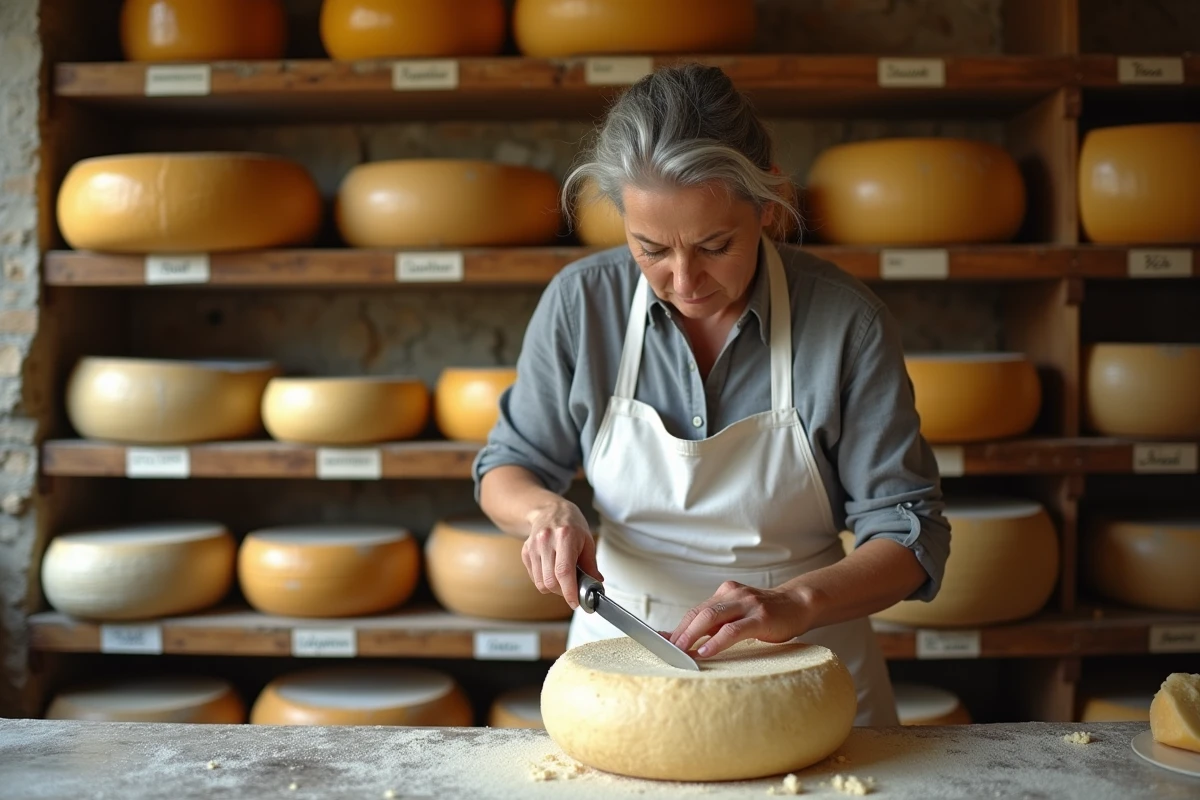
Each appellation imposes specific cattle breeds and a defined geographical area. Comté requires raw milk from Montbéliarde or French Simmental cows raised in the Jura mountains. Beaufort is even more restrictive: only Tarine and Abondance breeds are allowed, in the high mountain area of Savoy.
Cantal is more flexible regarding breeds, but its production area remains confined to the Cantal department and a few neighboring municipalities in Auvergne. This flexibility regarding breeds does not prevent a strict specification on processing and aging.
Ongoing climate adaptations
The unions of Comté and Beaufort have initiated gradual revisions of their specifications since 2022-2023 to take into account climate change. Discussions focus on grazing dates, feed management in case of drought, and the experimentation of more resilient pastures. These adjustments, monitored by the INAO, show that AOPs are not fixed in a heritage vision disconnected from agricultural realities.
Texture and taste of Cantal, Comté, and Beaufort: what the production yields on the plate
The difference in cooking is directly reflected in the mouth. Comté develops a soft and dense paste, with aromas that evolve according to the aging duration: notes of hazelnut and dried fruits on young wheels, more pronounced aromas (spices, roasting) on long-aged cheeses.
Beaufort is distinguished by a particularly melting texture, often described as creamy. Its concave heel (the inward shape of the edge of the wheel) is an immediate visual sign. In the mouth, it leans towards buttery and floral notes, with a marked length on the palate.
Cantal offers a different profile. Young, it is mild and slightly tangy, with a soft paste. As it ages, the paste becomes drier, more crumbly, and the aromas gain in intensity: earthy notes, sometimes sharp on an old Cantal. The rind of Cantal, whether young or old, is thick and dry, distinctly different from the washed rinds of Comté or Beaufort.
- Comté: dense and soft paste, hazelnut to roasting aromas depending on aging, brown washed rind
- Beaufort: melting and creamy paste, buttery and floral notes, recognizable concave heel, no holes in the paste
- Cantal: crumbly paste as it ages, powerful and earthy taste on long aging, thick and dry rind
Dairy sectors and economy: very different dynamics depending on the AOP
Beyond taste, these three cheeses do not experience the same economic reality. Data from FranceAgriMer shows a downward trend in the number of dairy farms in the Cantal AOP area, with difficulties in recovery in the average mountain region. The Comté sector, on the contrary, continues to attract installations and maintain a dense network of fruitières (collective production workshops).
Beaufort is situated between the two: few farms, but a sufficiently high milk valuation to stabilize production. The price of milk paid to Beaufort producers is among the highest in France for cow’s milk, which partially compensates for the small size of the sector.
Land pressure in the Cantal area
The decline in dairy farming in the Cantal AOP area raises questions about the sustainability of the production fabric. Farms in the Auvergne average mountain region face increasing land pressure and transmission difficulties. This context contrasts with the Jura dynamics of Comté, where cooperation among producers via fruitières maintains a high density of production.
Recognizing these three cheeses on a platter: visual clues
On a platter, a few markers allow for the identification of each cheese without tasting.
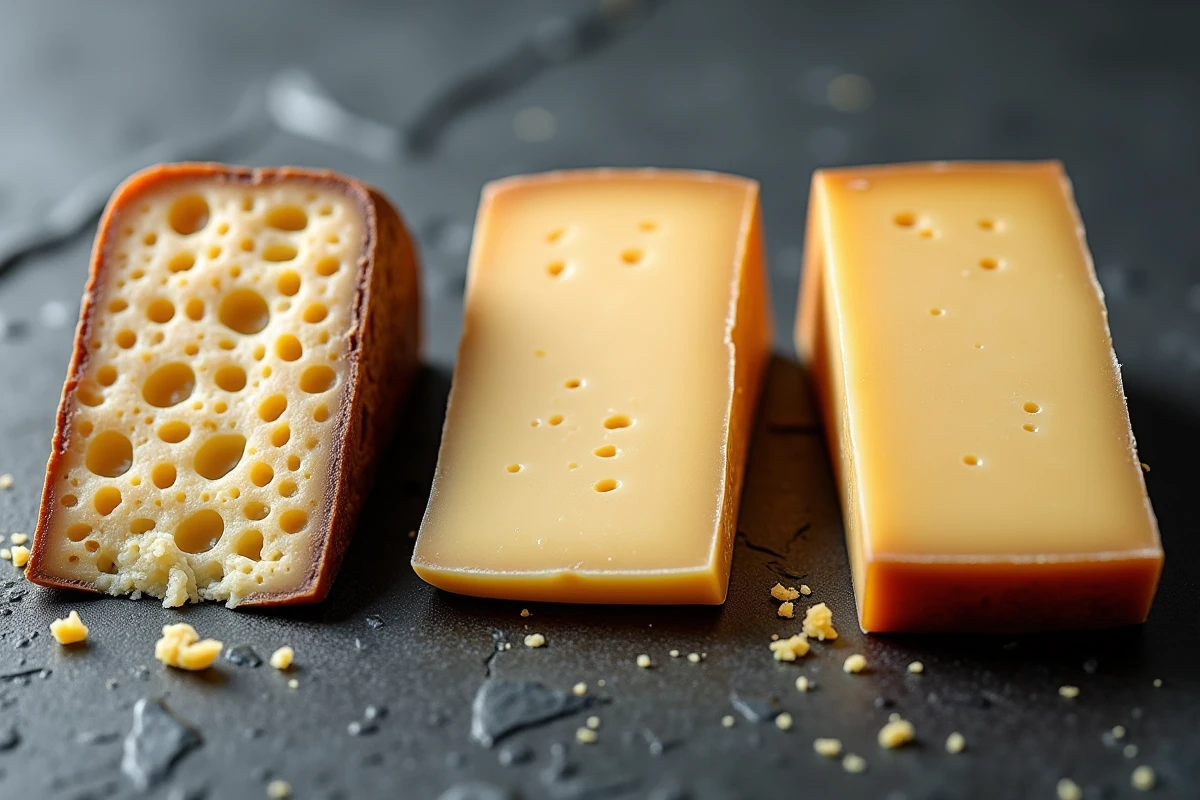
- Beaufort never has holes in the paste and features a characteristic concave heel. Its paste is smooth, ivory to pale yellow in color
- Comté may have small openings in the paste. Its washed rind varies from brown to gray depending on the aging cellars. The wheels are flat, with a straight heel
- Cantal is recognized by its thick and bumpy rind on aged versions, and by its paste that crumbles with a knife. The color of the paste leans towards a deeper yellow
These visual clues remain the most reliable for a non-specialist. The concave heel of Beaufort is the most immediate sign to spot, even on a cut portion.
Three AOPs, three ways to transform mountain milk, three distinct economic trajectories. The cheese platter benefits from being read like a map: each paste tells a story of a mountain range, a breed, a technical gesture. And it is precisely this diversity of specifications that prevents them from being confused, once you know where to look.