
Which leisure activities are truly worth the trip to Madagascar, and which ones depend on a narrow seasonal window or unpredictable road access? The large island offers a range of activities from scuba diving to high-altitude treks, but not all can be practiced under the same conditions or during the same periods. Comparing these parameters allows for informed choices about leisure activities rather than relying solely on the promise of a landscape.
Leisure Activities in Madagascar: Accessibility, Season, and Physical Level
The table below cross-references the main activities with their practice window, access difficulty, and required physical effort level. These criteria radically change the experience depending on the traveler’s profile.
| Activity | Best Period | Road Access | Physical Level |
|---|---|---|---|
| Whale Watching (Île Sainte-Marie) | June – September | Domestic flight or long track | Low |
| Trek in the Makay Massif | April – November | Difficult tracks, several days | High |
| Hiking in Isalo National Park | April – November | RN7, paved | Moderate |
| Diving and Snorkeling in Nosy Be | April – December | Flight to Nosy Be | Low to Moderate |
| Visit to the Tsingy of Bemaraha | May – November (park closed during rainy season) | Western tracks, often impassable in wet season | Moderate to High |
| Lemur Watching (Andasibe) | All year round | RN2 then RN5, paved | Low |
| Kitesurfing (Sakalava Bay, North) | April – November (trade winds) | Track from Diego Suarez | High |
| Canoeing on Rivers (Tsiribihina) | May – October | Organized departure from Miandrivazo | Low |
Two constants emerge: the dry season concentrates the majority of feasible leisure activities, and the most spectacular activities (Tsingy, Makay) are also the most demanding in terms of transport. The Tsingy of Bemaraha park generally closes during the rainy season, and the tracks leading there can become impassable well before the official closure.
To find other activities suited to your travel dates, you can check the Gasy website to discover leisure activities categorized by type and region.

Nature Leisure in Madagascar: What the Rainy Season Really Changes
Most guides present Madagascar as a dry season destination. The reality is more nuanced. According to Ma’Tour, the Southwest and the Highlands remain feasible during the wet season with a flexible itinerary.
The practical consequences are concrete: cut-off roads, suspended boat excursions, delayed domestic flights. A blue alert from Météo Madagascar signals residual risks (rains, floods, landslides) even after a cyclone has passed. Booking a sea outing or a hike that depends on a long land journey without a reprogramming margin exposes you to a pure and simple cancellation.
Activities Resilient to Weather
Some activities handle climatic uncertainties better than others:
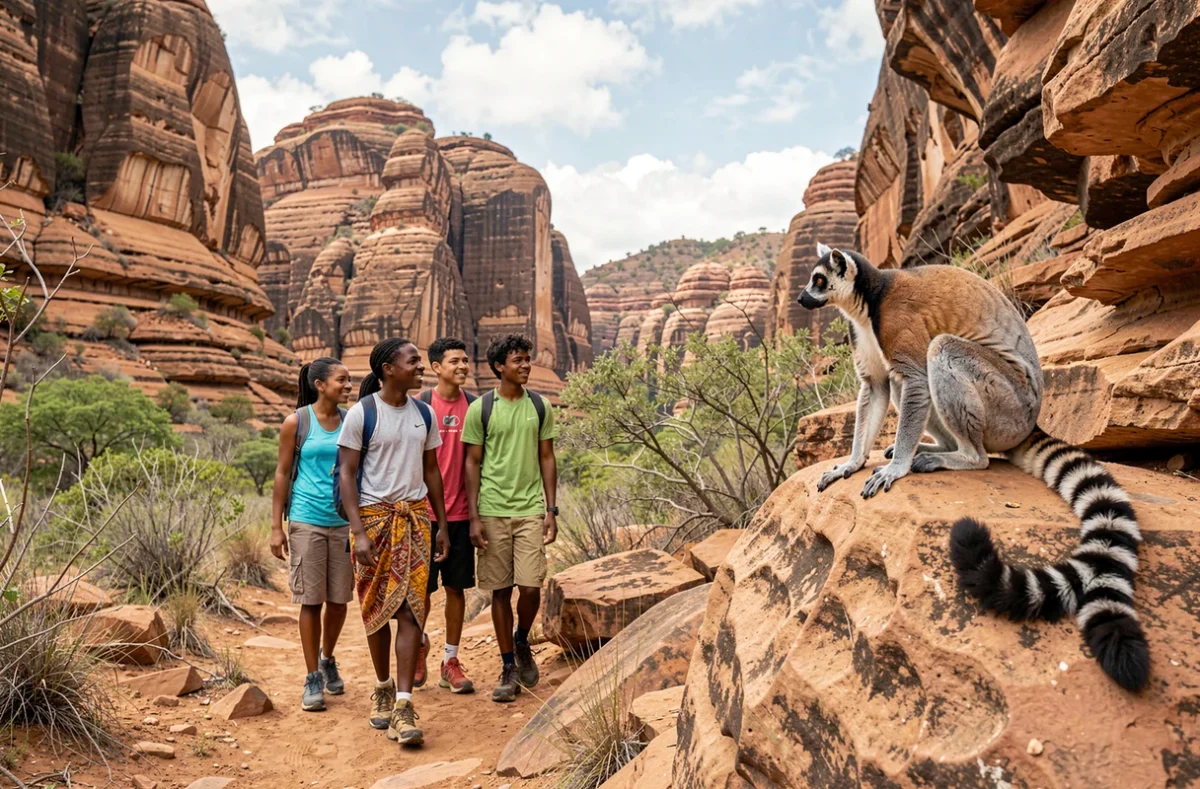
- Lemur watching in Andasibe National Park works year-round. Access via paved road (RN2/RN5) limits the risk of cut-offs, and the indris remain active in the rain.
- Cultural visits in the Highlands (Betafo, Antsirabe) do not depend on marine conditions or isolated tracks. They offer a solid alternative when the weather blocks coastal outings.
- Diving in Nosy Be remains possible over a wide window, but on days of high swell after a cyclonic episode, boat outings are suspended without notice.
A program built solely around coastal activities or isolated tracks during the wet season carries a high risk of modification. Mixing leisure activities accessible via paved roads with more adventurous outings provides real flexibility.
Community Ecotourism: A Leisure Activity with Measurable Local Impact
Beyond national parks, community initiatives transform leisure into a local economic lever. The Anja community reserve, managed by local residents, is a documented example. The income from visits directly funds the conservation of ring-tailed lemurs and village infrastructure.
This model differs from classic circuits where most of the travel budget passes through operators based outside Madagascar. A traveler who chooses a community structure often pays less than for a packaged tour while generating a more direct impact.
Criteria for Identifying a Community-Oriented Leisure Activity
Not all projects labeled “ecotourism” operate the same way. A few concrete indicators help differentiate:
- The site is managed by a village association or a local cooperative, not by an external tour operator.
- Guides are trained locals, often from families living around the protected area.
- An identifiable portion of the entrance fees funds a visible project (school, reforestation, dispensary).
Community ecotourism remains a minority in the Malagasy tourism offer, but it exists in several regions (Anja, Eastern forest corridor, certain coastal areas). Spotting it requires a bit of research in advance.
Île Sainte-Marie and Whale Watching: An Activity That Cannot Be Scheduled to the Day
Whale watching for humpback whales off the coast of Île Sainte-Marie attracts travelers every year between June and September. The schedule varies from year to year, and no outing guarantees a sighting. The whales follow migratory routes influenced by water temperature and currents, not by tourist schedules.
This activity fits better into a flexible multi-day stay on Sainte-Marie than into a round-trip excursion scheduled for a specific date. Travelers planning two or three sea outings over a week multiply their chances without turning the stay into a lottery.
Sainte-Marie also offers preserved beach landscapes, diving on little-frequented reefs, and walks in the tropical forest. Building a program solely around whale watching exposes you to disappointment; adding other beach or land leisure activities transforms the stay even if the cetaceans remain elusive.
Leisure activities in Madagascar are divided between those accessible year-round and those with a narrow seasonal window. Cross-referencing the travel period with road conditions and local weather remains the most reliable filter for constructing a realistic program, far from generic lists that overlook these constraints.