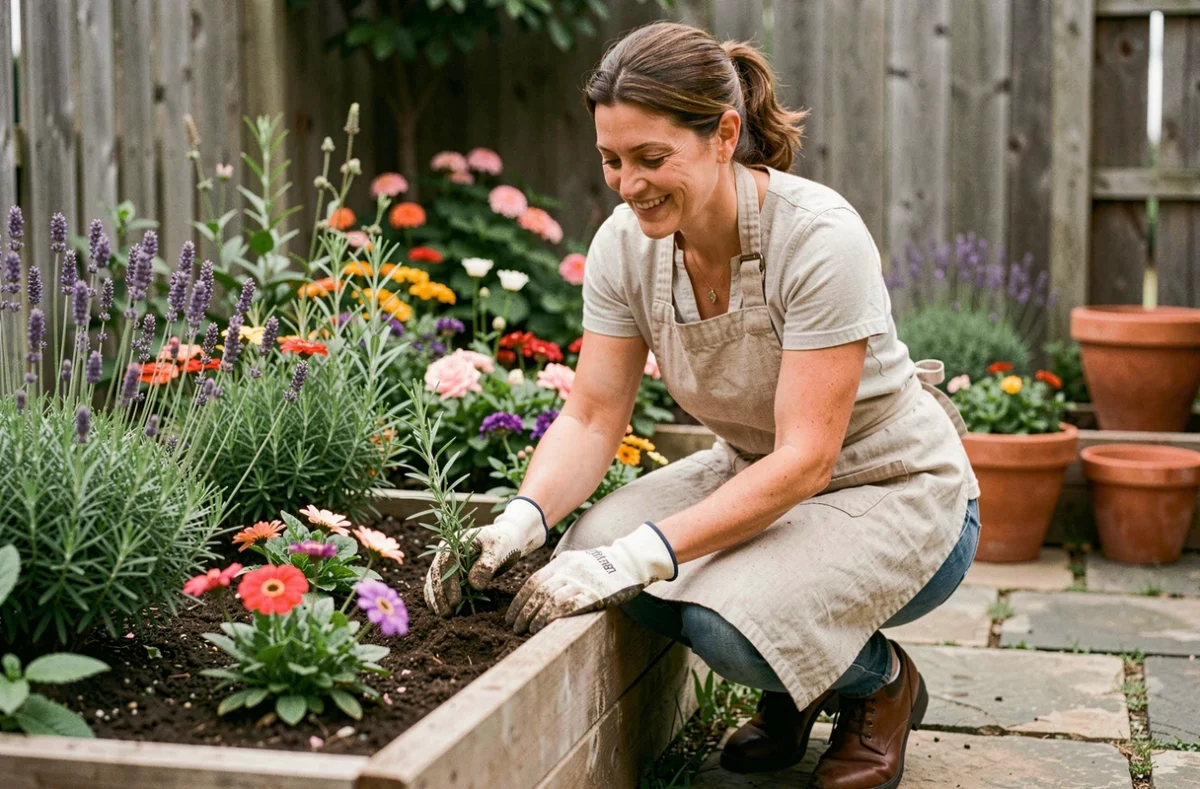
A garden that remains attractive in January as well as in August does not rely on a list of miracle plants. The question is rather: what measurable parameters (soil type, exposure, water regime, local regulations) determine the most sustainable planting and landscaping choices? This article compares the variables that truly impact the visual outcome of a garden, season after season.
Blooming Calendar and Foliage Persistence: Comparative Table by Season
Before choosing plants, it is useful to visualize what types of vegetation provide visual interest at each time of year. The table below distinguishes four categories based on their seasonal contribution.
| Season | Flowering Plants | Evergreen Foliage | Structural Elements |
|---|---|---|---|
| Spring | Bulbs (tulips, daffodils), fruit trees | Buxus, laurel | Arches, trellises for climbers |
| Summer | Roses, lavenders, agapanthuses | Photinia, eleagnus | Pergolas, raised beds |
| Autumn | Asters, Japanese anemones | Osmanthus, sasanqua camellia | Ornamental grasses (miscanthus) |
| Winter | Hellebores, winter jasmine | Holly, variegated ivy | Decorative barks (birch, dogwood) |
The takeaway: evergreen foliage and barks fill the months without blooms. A garden that relies solely on flowers remains dull from November to March.
Exploring the world of the Déco et Jardin site, one finds this logic of complementarity between foliage, structures, and successive blooms applied to different styles of outdoor spaces.
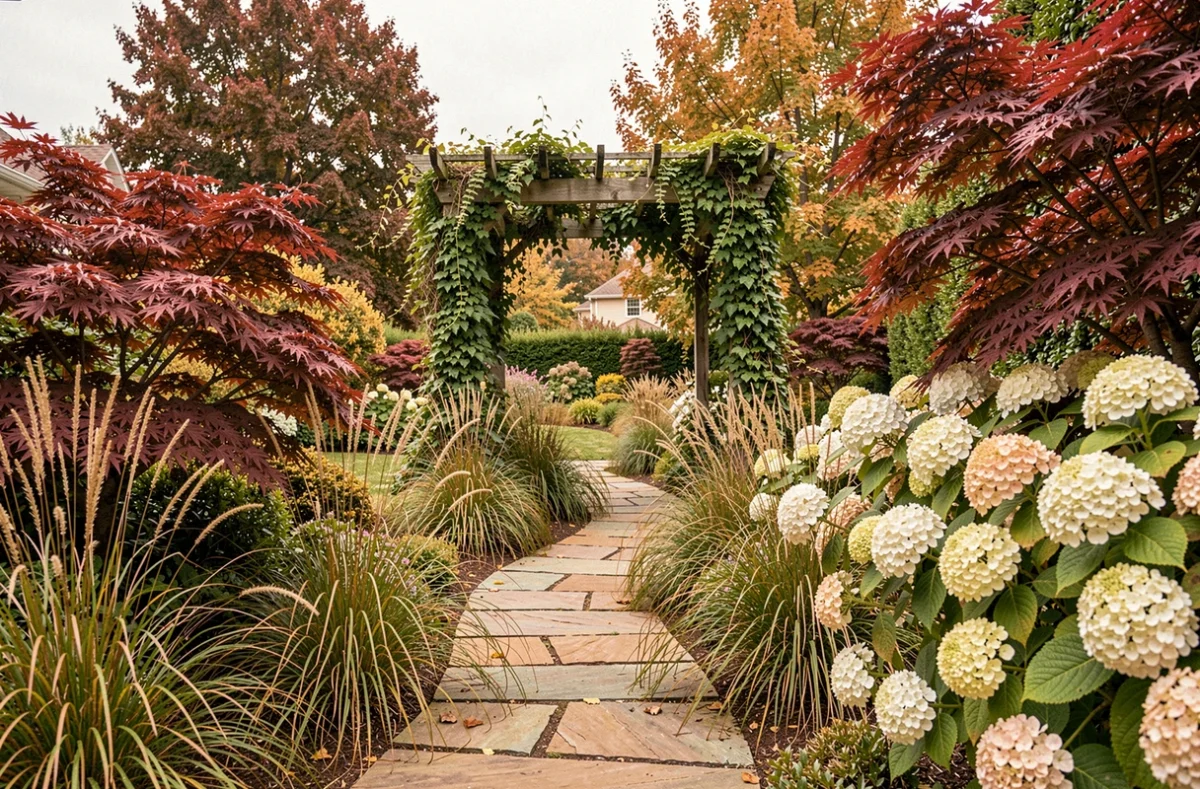
Soil and Exposure: The Two Variables That Change the Entire Planting Plan
Competitors often approach plant selection as a matter of taste. Field data shows that soil texture and garden orientation eliminate half of the options even before consulting a catalog.
Identifying Soil Texture Without a Laboratory
A simple test involves taking a handful of moist soil and trying to form a sausage shape. If the soil cracks immediately, it is sandy and draining: lavenders, bush roses, and grasses thrive there. If the sausage holds and remains sticky, the soil is clayey: it retains water, which is suitable for hydrangeas, hostas, and astilbes, but exposes sensitive roots to suffocation in winter.
A calcareous soil (effervescence with white vinegar) points to garrigue plants. An acidic soil (no reaction) opens the door to camellias, rhododendrons, and heathers. Planting without knowing the soil pH is like cooking without tasting.
Exposure: The Often Underestimated Factor in Winter
A south-facing facade receives enough light to maintain compact evergreens (rosemary, santolina). A north-facing area or one shaded by a building limits summer blooms but welcomes ferns, hellebores, and variegated ivy that structure the garden in winter.
Water Management in the Garden: Climate Adaptation and Regulatory Constraints
The Ifop barometer conducted for Unep in March 2025 places rainwater harvesting at the top of the adaptation practices cited by garden owners in France. Respondents also mention the choice of drought-resistant plants and the shift towards a more natural lawn.
These trends are not solely voluntary. Prefectural orders may limit or even prohibit watering lawns, flower beds, and ornamental gardens during drought episodes, sometimes with different rules for vegetable gardens or young trees. Checking the restrictions in effect in one’s municipality before planning summer maintenance avoids penalties and requires rethinking the composition of flower beds.
Water-Efficient Plants: Selection Criteria
- Gray or silver foliage (lavender, stachys, wormwood): the color indicates a leaf hairiness that limits evapotranspiration
- Deep taproots (old roses, gaura): they capture residual moisture even after several weeks without rain
- Persistent ground covers (thymus serpyllum, sedum): they reduce evaporation from bare soil and limit weeding
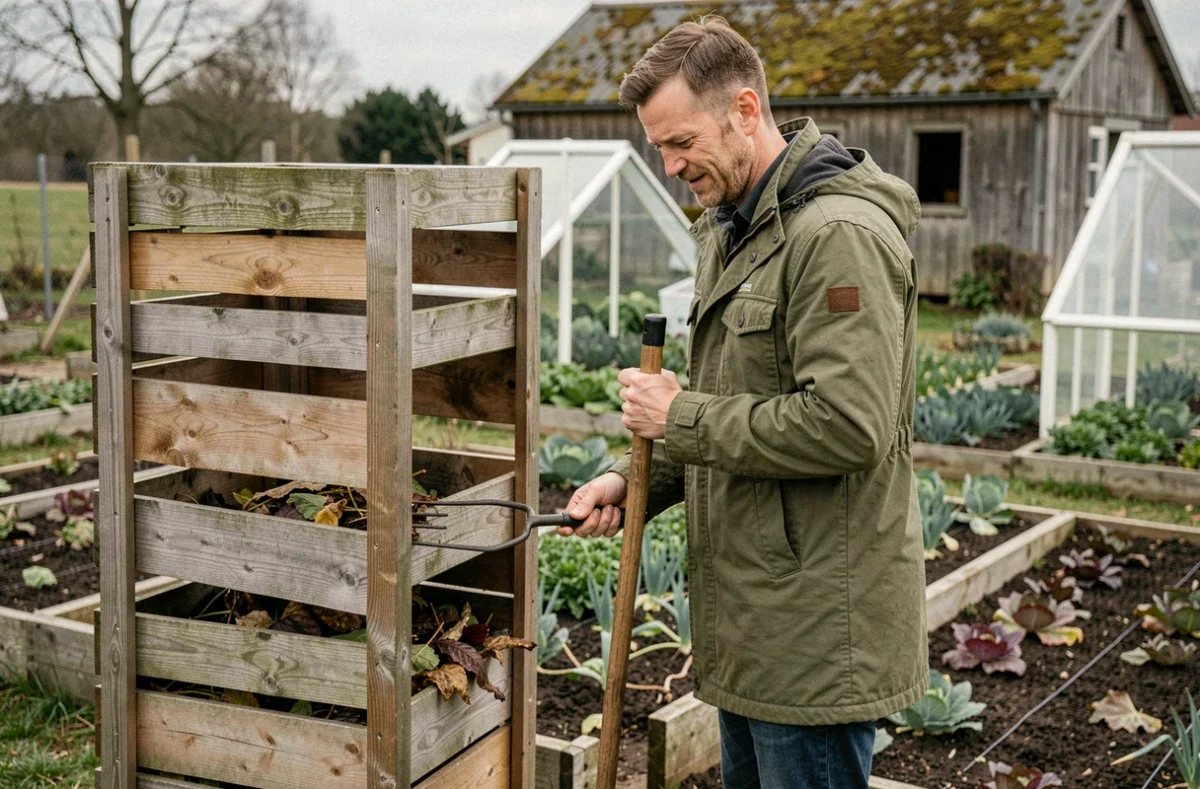
Colors and Volumes Throughout the Months: Composing a Garden That Never Fades
The common temptation is to accumulate flowering species without considering their adult volume or the overall color palette. Two principles help avoid a chaotic result.
The first is the three-tier rule: a tree or large shrub at the back of the bed, medium perennials in the center, and ground covers at the edges. This layering creates depth even in a small space and ensures that at least one layer remains green or textured in every season.
The second concerns colors. Warm tones (oranges, reds) visually bring a bed closer, while cool tones (blues, purples) push it away. Placing blue blooms at the back of the garden enlarges the perceived space, a particularly useful effect in narrow urban gardens.
- Spring: dominant yellows and whites (daffodils, light tulips) to brighten after winter
- Summer: explosion of pinks, purples, and blues (roses, lavenders, agapanthuses) against a backdrop of dense green
- Autumn: palette of rusts and purples (asters, grasses, liquidambar foliage)
- Winter: white and green (hellebores, variegated hollies, light-colored birch barks)
Visual continuity rests on a simple principle: each month must have at least one plant in full bloom. When overlaying the blooming table with the calendar of evergreen foliage, the empty months become clear. This is where decorative barks and dry grasses take over.
The most resilient garden to climatic fluctuations and the most visually pleasing is not the one that contains the most species. It is the one where each plant has been chosen based on soil, exposure, local water regime, and its contribution to a specific layer. Watering restrictions, which multiply every summer, accelerate this logic of reasoned selection rather than decorative accumulation.