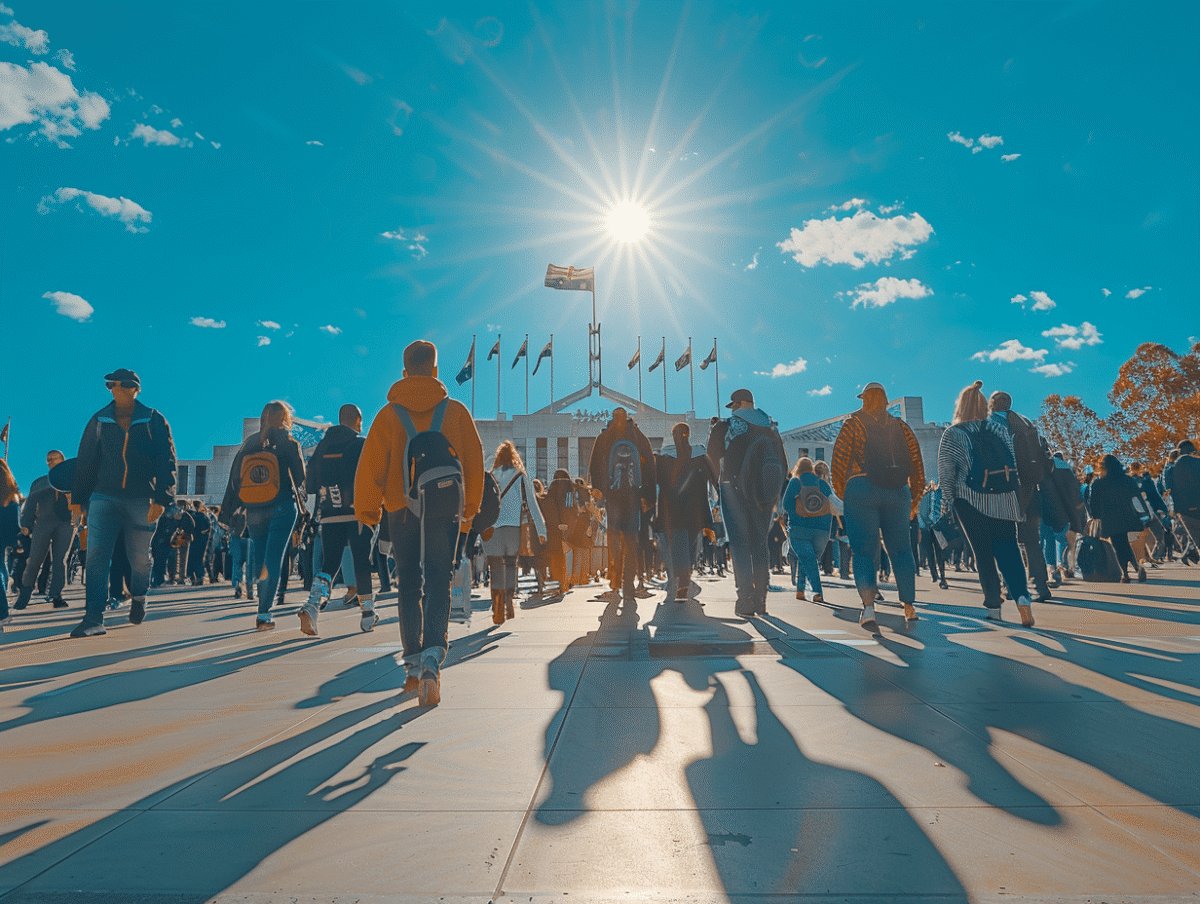
Canberra, often overshadowed by the iconic cities of Sydney and Melbourne, is an undiscovered gem nestled in the heart of Australia. As the federal capital, it embodies both the nerve center of Australian politics and a vibrant hub of culture and art.
Majestic government institutions sit alongside world-renowned museums, providing a rich historical and artistic backdrop. The vast green spaces and shimmering bodies of water add a touch of serenity, inviting visitors to explore its various treasures and discover the authentic soul of this unique city.
History and Political Significance of Canberra
Canberra, designated as the capital of Australia in 1908, is located in the Australian Capital Territory. The city is the result of a utopian vision, designed by architects Walter Burley Griffin and Marion Mahony Griffin. Selected for its strategic position between Sydney, 280 km to the northeast, and Melbourne, 660 km to the southwest, Canberra was meant to symbolize national unity and provide an alternative to the rivalries between these two metropolises.
A Thoughtful and Visionary Design
Walter Burley Griffin and Marion Mahony Griffin envisioned Canberra as a garden city, seamlessly integrating nature and urban planning. Lake Burley Griffin, named in honor of the architect, is a central feature. The wide boulevards, green spaces, and monumental government buildings reflect this initial ambition.
- Walter Burley Griffin: visionary architect
- Marion Mahony Griffin: collaborator and wife of Walter
- Lake Burley Griffin: centerpiece of urban design
An Indigenous Heritage
Before European colonization, the Canberra region was inhabited by the Aboriginal peoples Ngunnawal and Ngambri. Their millennia-long presence and deep connection to the land are still visible today, particularly through sacred sites and Indigenous artworks. This history enriches the cultural and symbolic dimension of the city.
The capital of Australia is more than an administrative center. It reflects a rich and complex history, blending Indigenous heritage with modern aspirations.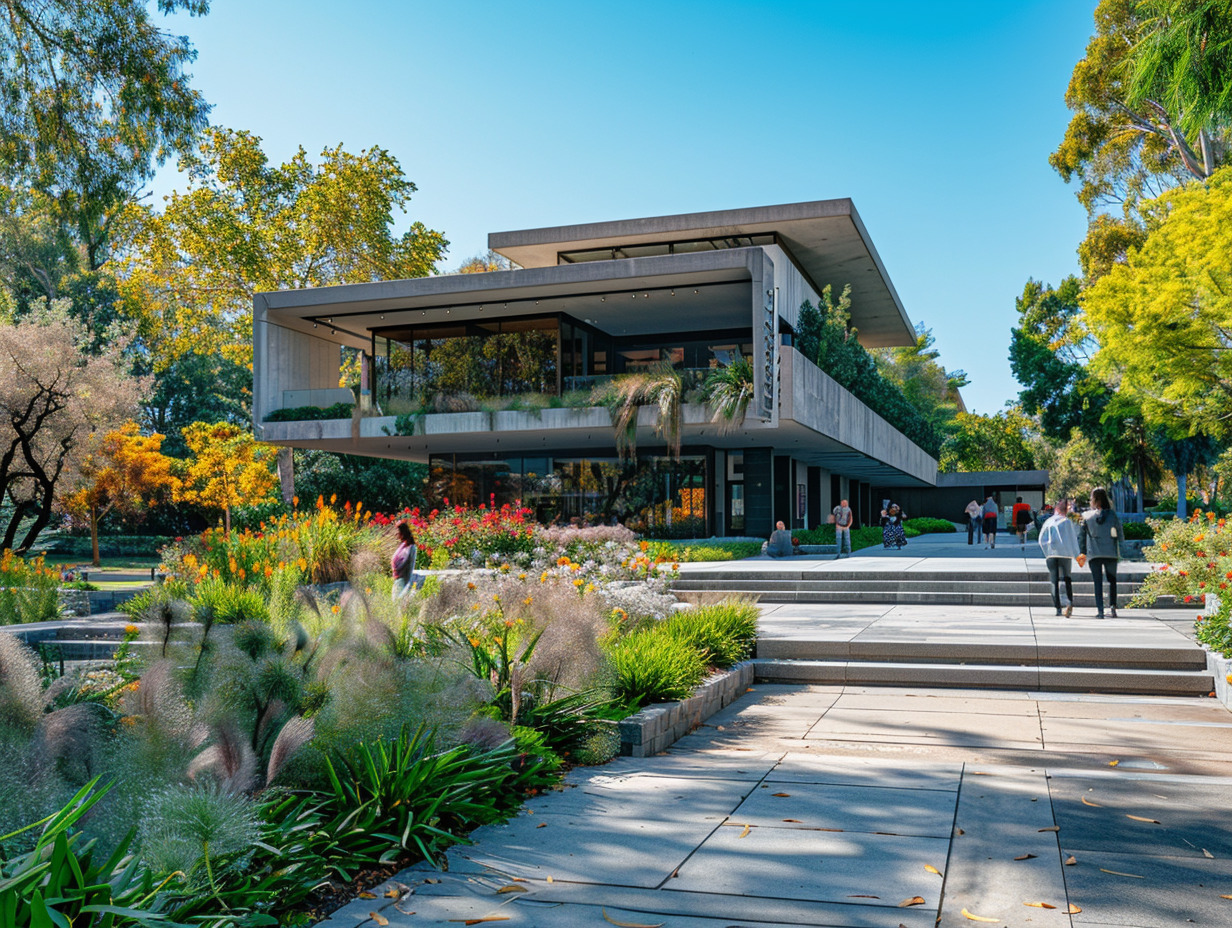
Cultural Wealth and Must-See Attractions
Canberra is a true treasure trove of cultural diversity and tourist attractions. The Australian War Memorial stands as a poignant tribute to the sacrifices of Australian soldiers. Located at the foot of Mount Ainslie, this memorial combines a museum, archives, and a commemorative sanctuary, offering an immersive and educational experience.
The Australian Parliament House is another iconic symbol of the city. Designed by architect Romaldo Giurgola, this modern building, inaugurated in 1988, is not only the seat of the Australian government but also an architectural masterpiece. Visitors can explore its vast public spaces, debating chambers, and even attend parliamentary sessions.
For science and technology enthusiasts, Questacon is a must-visit. This national museum offers interactive exhibits that will delight both young and old. The National Gallery of Australia, on the other hand, houses an impressive collection of Australian and international art, ranging from traditional Aboriginal works to contemporary creations.
- The National Dinosaur Museum: dive into the era of dinosaurs with captivating paleontological exhibits.
- Royal Australian Mint: discover the process of making Australian coins and the country’s numismatic history.
To enjoy nature, head to Commonwealth Park, a green space in the heart of the city, perfect for peaceful walks around the artificial lake. Don’t miss the Mount Ainslie Lookout, which offers a spectacular panoramic view of Canberra, especially at sunset.
The Australian National Botanic Gardens and the Tidbinbilla Nature Reserve are havens of biodiversity, perfect for outdoor getaways. The Old Bus Depot Markets is a vibrant market where local crafts, fresh produce, and cultural activities come together, reflecting the dynamic spirit of the capital.