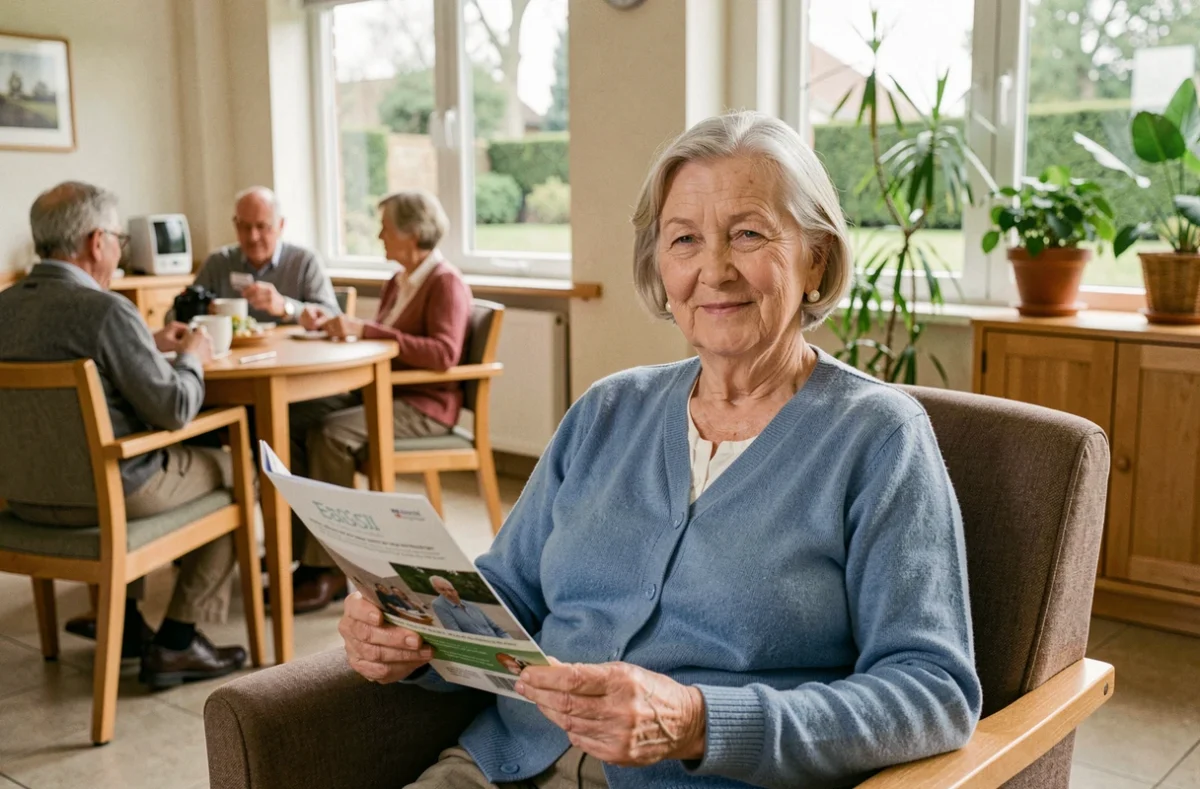
In Belgium, the rate of a nursing home refers to the daily amount charged to the resident for accommodation, meals, and a basic set of services. This daily price does not cover all actual costs: additional charges apply depending on care, level of dependency, and chosen services. Understanding the structure of these costs helps avoid unpleasant surprises at the time of admission.
Contractual grid and supplements: what the daily rate does not reveal
The rate displayed by a nursing home corresponds to the basic accommodation price. It generally includes the room, meals, laundry maintenance, and access to common areas. Walloon regulations have strengthened transparency requirements regarding the composition of this price, requiring establishments to detail their contractual grid.
In practice, the monthly bill often exceeds the announced amount. The supplements pertain to specific items: incontinence products, hairdresser, medical pedicure, certain paramedical acts, or even recreational activities. A reliable comparison requires checking the supplement grid, not just the daily rate.
To consult the rates of nursing homes on Senior Belgium, it is useful to compare several establishments while considering these additional items, which can represent a significant part of the actual budget.
Price differences between Belgian regions: Brussels, Flanders, Wallonia
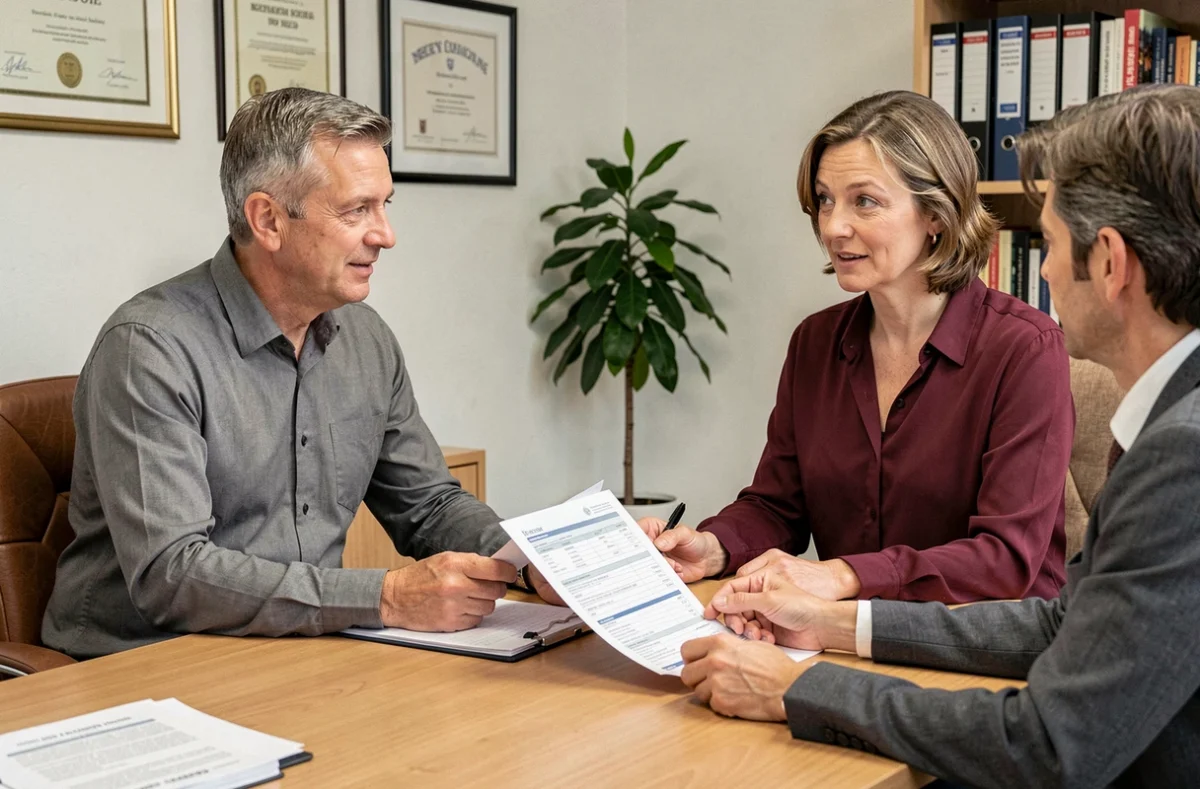
Belgium has about 1,500 accommodation facilities for the elderly, totaling nearly 150,000 beds. The geographical distribution directly influences the rates charged.
In Flanders, establishments generally have a higher average capacity (around 105 beds), which can allow for economies of scale on certain fixed costs. In Brussels, the average capacity is about 109 beds, but real estate costs drive prices up. In Wallonia, the structures are smaller (an average of 88 beds) and the rates remain overall more accessible than in the other two regions.
This price difference partly explains why nearly 2,000 French seniors reside in Belgian nursing homes, mainly in the Walloon border areas. The value for money is perceived as more favorable there than in France for a comparable level of services.
Regional autonomy aids: three distinct systems
The funding of a stay in a nursing home does not rely solely on the resident’s pension. Regional aids exist, but they operate according to very different logics from one region to another.
- In Wallonia, the allowance for assistance to the elderly (APA) depends on the resident’s income and degree of loss of autonomy. Its amount varies significantly from one case to another.
- In Brussels, the request for aid goes through Iriscare, the regional body responsible for health and assistance matters.
- In Flanders, the zorgbudget voor ouderen met een zorgnood constitutes a specific monthly allowance, distinct from the Walloon and Brussels systems.
The Observatory of Senior Autonomy in Belgium emphasizes that these aids become particularly crucial when the cost of the nursing home exceeds the resident’s pension. Checking eligibility before entering the establishment helps avoid discovering a high out-of-pocket expense too late.
Nursing home or service residence: two pricing logics
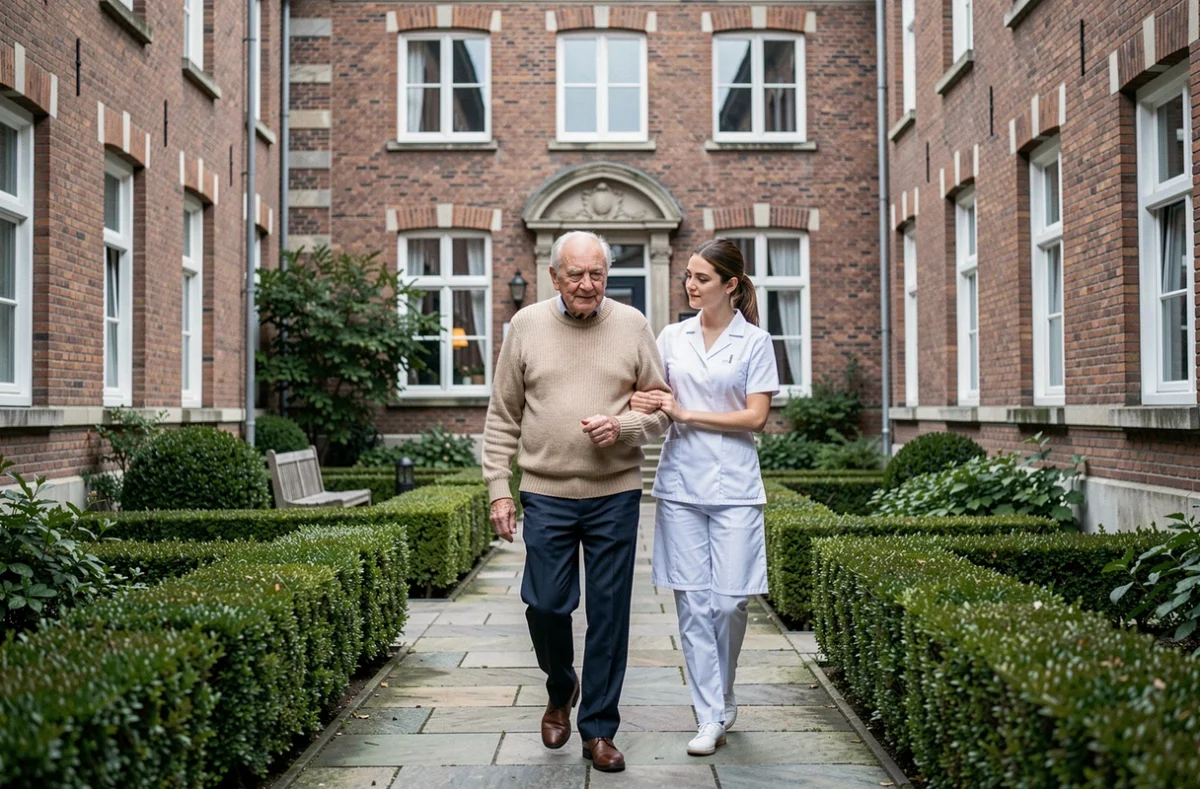
The confusion between nursing homes (MR or MRS) and service residences is common, even though these structures meet different needs and budgets.
A nursing and care home (MRS) accommodates individuals with significant loss of autonomy, with permanent nursing staff. The rate includes a medical dimension absent in service residences. The latter cater to seniors aged 60 and over, still autonomous, who rent a private accommodation (studio or apartment) within a complex offering collective services.
Service residences display variable prices depending on location, size of the accommodation, and included services. Their cost may seem high, but it covers an individual living environment with a private kitchen, which is not the case in a traditional nursing home. The choice between these two options primarily depends on the senior’s level of autonomy and the nature of the required care.
Alternatives to permanent accommodation in a nursing home
The Free Mutualities point out a lack of intermediate solutions between home care and permanent entry into a nursing home. Several options exist, although they remain underdeveloped in Belgium.
- Short-stay centers allow for temporary accommodation, often after hospitalization or to relieve a family caregiver. Their daily rate is comparable to that of a nursing home, but the limited duration reduces the total cost.
- Group housing and intergenerational formulas offer a shared environment, with costs lower than a nursing home, while breaking isolation.
- Day centers, especially for people with Alzheimer’s disease, provide daytime support without permanent accommodation.
These options may not suit all profiles, but they deserve to be evaluated before committing to permanent accommodation, the monthly cost of which can weigh heavily on the family budget.
The actual rate of a nursing home in Belgium is never limited to the figure displayed in a brochure. Between contractual supplements, regional disparities, and the aids to which each resident may be entitled, the gap between the announced price and the actual out-of-pocket expense justifies a detailed analysis, establishment by establishment.